


Thank you for being here at the beginning of Lent.
Ash Wednesday is not loud. It does not rush. It invites us to slow down and to tell the truth about ourselves before God. What follows is not a performance, but a quiet reflection for those willing to sit in the dust for a while.
Ash Wednesday begins with dust.
Not as a poetic idea, but as something tangible. A thumb presses ash onto skin. A cross is traced on the forehead. Words are spoken that we would rather avoid:
Remember that you are dust, and to dust you shall return.
The Church does not begin Lent with triumph. It begins with honesty. We are finite. We are fragile. We are not as in control as we imagine. Beneath the roles we play and the arguments we win, we are dust.
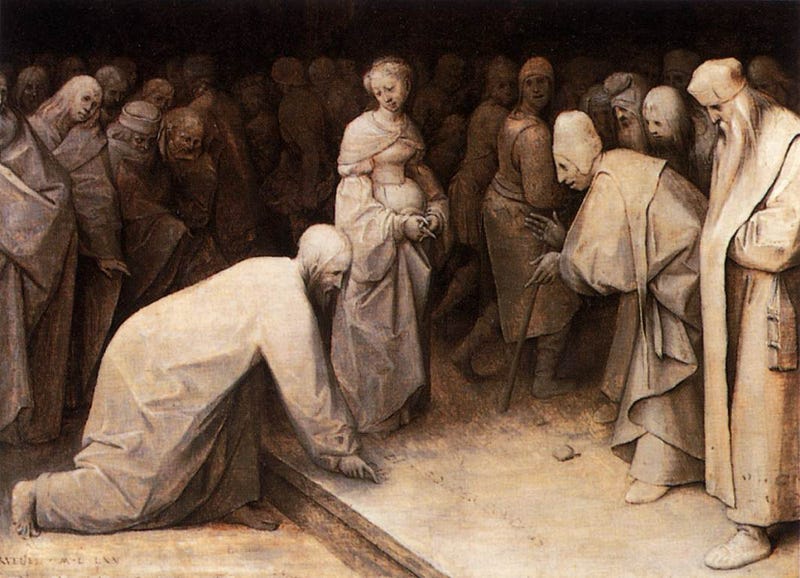
It is striking, then, that one of the most probing scenes in the gospels unfolds at ground level.
In John chapter 8, a woman is dragged into the temple courts at dawn. She has been caught in adultery. The law is cited with clinical precision. The crowd gathers quickly; outrage travels fast when there is a public example to be made. The question is carefully prepared before it is put to Jesus:
“In the Law, Moses commanded us to stone such women. Now what do you say?”
It is a trap disguised as righteousness. If he agrees, he forfeits his reputation for mercy. If he refuses, he appears to undermine the law. Either way, they think they have him cornered.
