


Welcome to today’s reflection.
Each weekday, paid subscribers receive an exclusive reflection designed to offer a thoughtful pause amid ordinary life. My prayer is that these brief reflections create a little space for curiosity, contemplation and wonder amid the noise of the day.
The reality of living with chronic illness is that I sometimes wake up already knowing I do not have enough.
Not enough energy for everything I had planned. Not enough strength to complete the ordinary tasks waiting for me. Sometimes, barely enough to get through the day without making tomorrow more difficult.
I have grown accustomed to this, although I am not sure I have ever completely accepted it. Planning becomes difficult when you cannot predict what your body will be capable of doing. I might have several reasonably good days and begin to feel that life is becoming manageable again. Then, without much warning, the energy disappears.
Sometimes the exhaustion lasts for a day. Sometimes I can go several days without being able to do very much at all before it finally begins to lift.
The uncertainty is as difficult as the fatigue itself. Every task has to be weighed against another: if I use my limited energy here, will there be enough left for something else?
Perhaps that is why the story of the feeding of the five thousand has begun to speak to me differently.
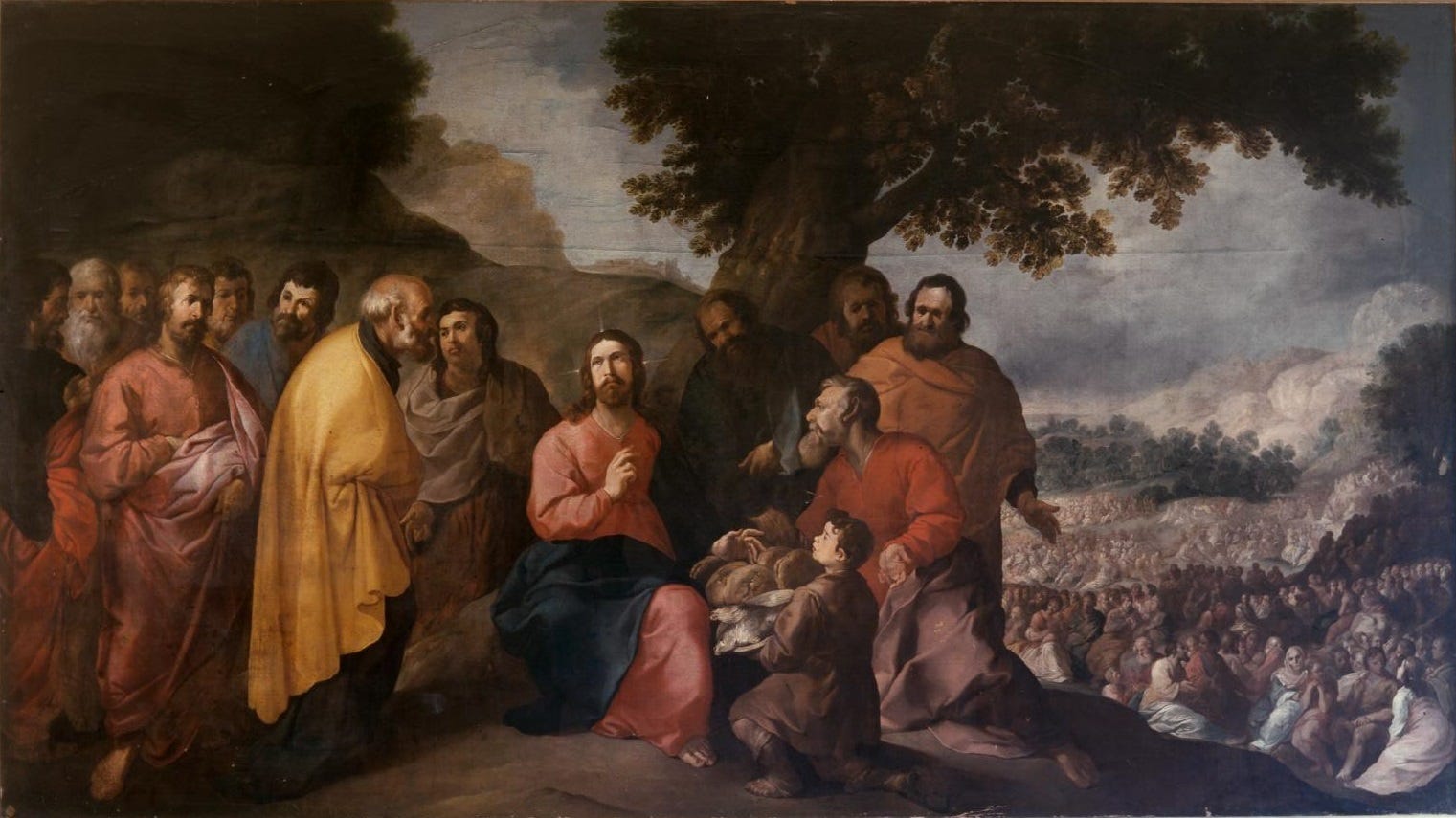
I have known it for most of my life. A hungry crowd gathers around Jesus. The disciples discover five loaves and two fish. Jesus gives thanks, the food is distributed, and somehow everyone eats until they are satisfied.
It is one of the most familiar miracles in the Gospels. In fact, it is the only miracle performed during Jesus’ public ministry that appears in all four Gospel accounts.
We often read it as a story about abundance. God can provide. Jesus can take something small and make it sufficient. What appears impossible to us is possible for him.
All of that is present in the story.
Yet before it becomes a story about abundance, it is a story about the fear of not having enough.
