


Welcome to today’s reflection.
Today I reflect on a loaf of bread I still remember from Somerset, and what it has made me wonder about the strange biblical invitation to “taste and see” that God is good.
Shameless Plug! My new book, Hidden in Plain Sight, is now out. It explores the overlooked details, surprising questions and ordinary moments that can change how we see Scripture and faith.
It is now available in paperback and on Kindle in the UK, USA and all other markets.
I thought I knew what bread was until we moved to the beautiful county of Somerset, here in England.
Of course, I had eaten plenty of bread before then. Most of it came from the supermarket, white and already sliced, wrapped neatly in plastic and ready whenever you needed it. It made perfectly good toast, particularly with a generous amount of butter and jam, and I had never really felt that bread needed to be anything more complicated than that.
Then we moved to a picturesque village with an old working flour mill just down the road.
The mill was fascinating in itself. You could watch the water driving the great wheel and see the machinery turning as the grain was ground into flour. There was something almost mesmerising about watching such an old process still doing exactly what it had been designed to do for hundreds of years. I would like to say that sense of history was the thing that has lived on in my mind ever since.
But honestly, what I remember most was the bread.
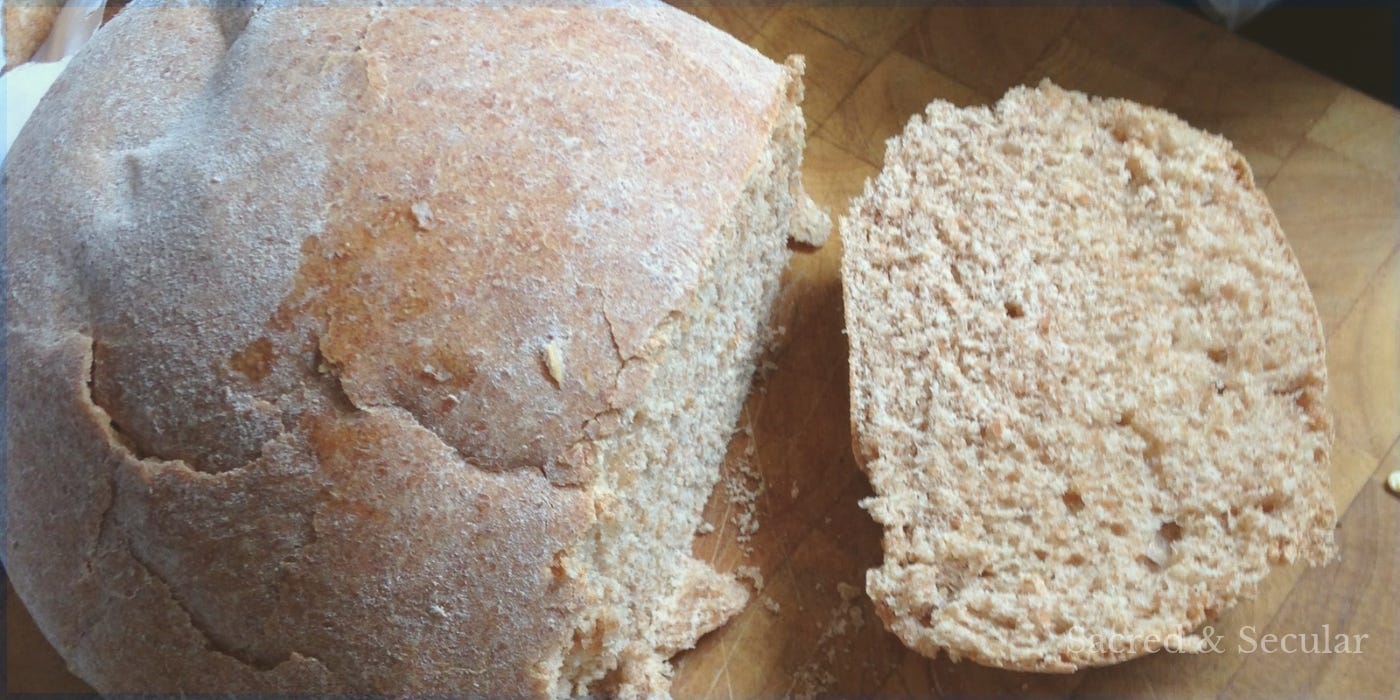
Every morning, fresh loaves were available, made with flour milled there, and they were nothing like the bread I had grown up eating. They were heavier, full of texture and grain, with a crust that actually required some effort and a fluffy inside that tasted of something rather than simply serving as carbohydrates to fill me up. I can honestly say that I have never eaten bread like it since.
We managed to get through about a loaf a day, which probably tells you something about how much we liked it. But strangely, we did not devour it in the way you might imagine. The small loaf tended to sit there throughout the day, and we would return to it, breaking off small pieces, adding some butter and eating it slowly.
We never toasted it. We never put jam on it. Just because we did not need to turn it into something else.
The bread itself was enough.
❦
When eating becomes an experience
I have been thinking about that bread recently because food has become so easy.
That is not necessarily a bad thing. There are days when convenience is wonderful. Food can arrive at the door in minutes. Supermarkets contain things our grandparents would have regarded as unimaginable luxuries, and on days when we are tired, busy or unwell, something that can simply be put in the oven or microwave is a gift.
And of course, living with teenagers means there is never a takeaway demand far away.
I am definitely not about to become the person who tells everyone they should mill their own flour before breakfast. I suspect that particular lifestyle change would survive until about Tuesday. But I wonder if convenience can occasionally change the way we experience things.
Much of the food we eat is designed to be eaten quickly. We consume it while doing something else, perhaps watching television, looking at our phones or thinking about whatever comes next. Hunger is dealt with, the plate is cleared, and life moves on. It feels transactional.
That bread in Somerset was very different. Eating it became something I noticed, like an event in itself. I had consumed bread all my life, but suddenly I discovered that something I thought I knew could contain far more than I had realised.
Perhaps that is why a particular line from the Psalms has been coming back to me.
“Taste and see that the LORD is good.”
