


Thank you for being a free subscriber here at Sacred & Secular.
You are welcome here. Free members receive a full reflection every Sunday, while paid membership unlocks daily reflections like this one and full access to an archive of more than 300 searchable reflections.
You may also be interested in my book, Sacred & Secular: Find God in the Ordinary (USA Link), which brings together some of the most popular and thought-provoking reflections from this journey so far.
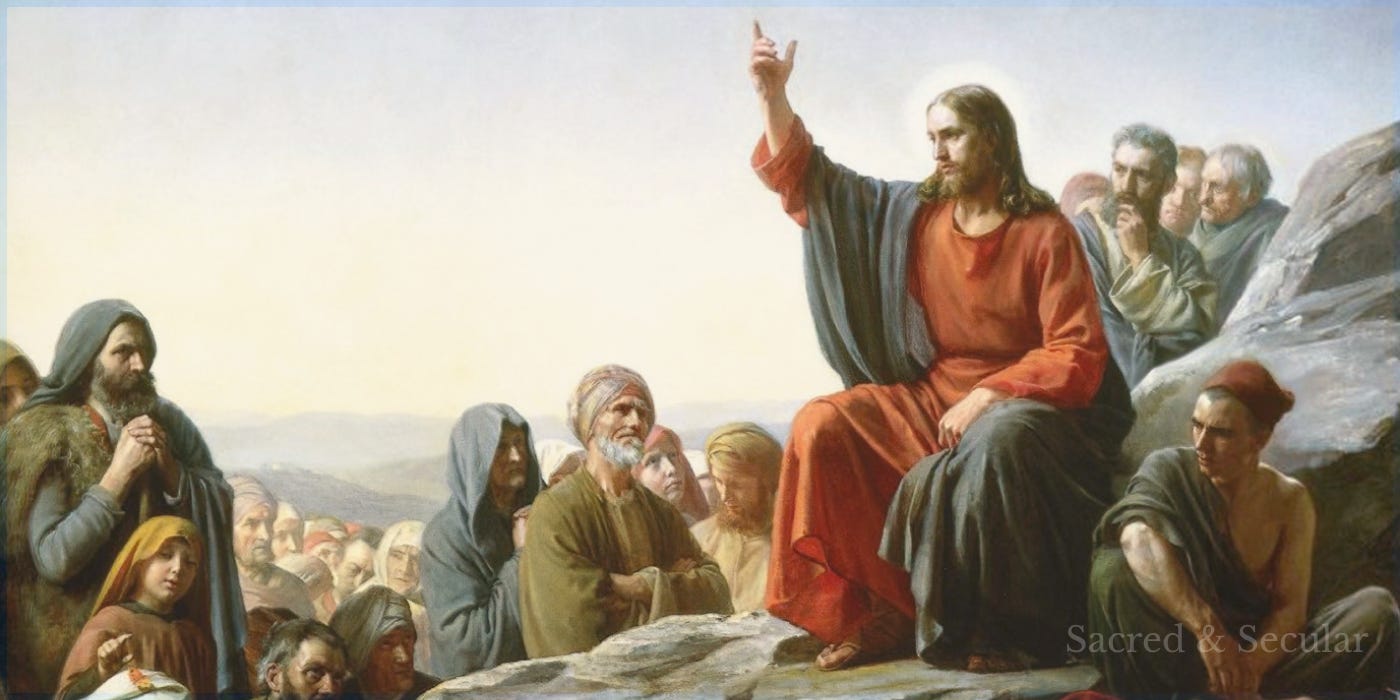
There is a moment in the Sermon on the Mount where Jesus tells his followers to make sure people can see what they are doing.
He has just described them as the salt of the earth and the light of the world. Then he explains what he means by the second image. Nobody lights a lamp and puts it underneath a bowl. They place it where the light can fill the room.
Then Jesus says:
“Let your light shine before others, that they may see your good deeds and glorify your Father in heaven.”
It is difficult to make that much clearer. Jesus expects something about his followers' lives to be visible. People should notice what they are doing. Except, only a short while later, in exactly the same sermon, Jesus seems to say almost the opposite.
“Be careful not to practise your righteousness in front of others to be seen by them.”
So which is it?
Should people see our good works, or shouldn’t they?
