


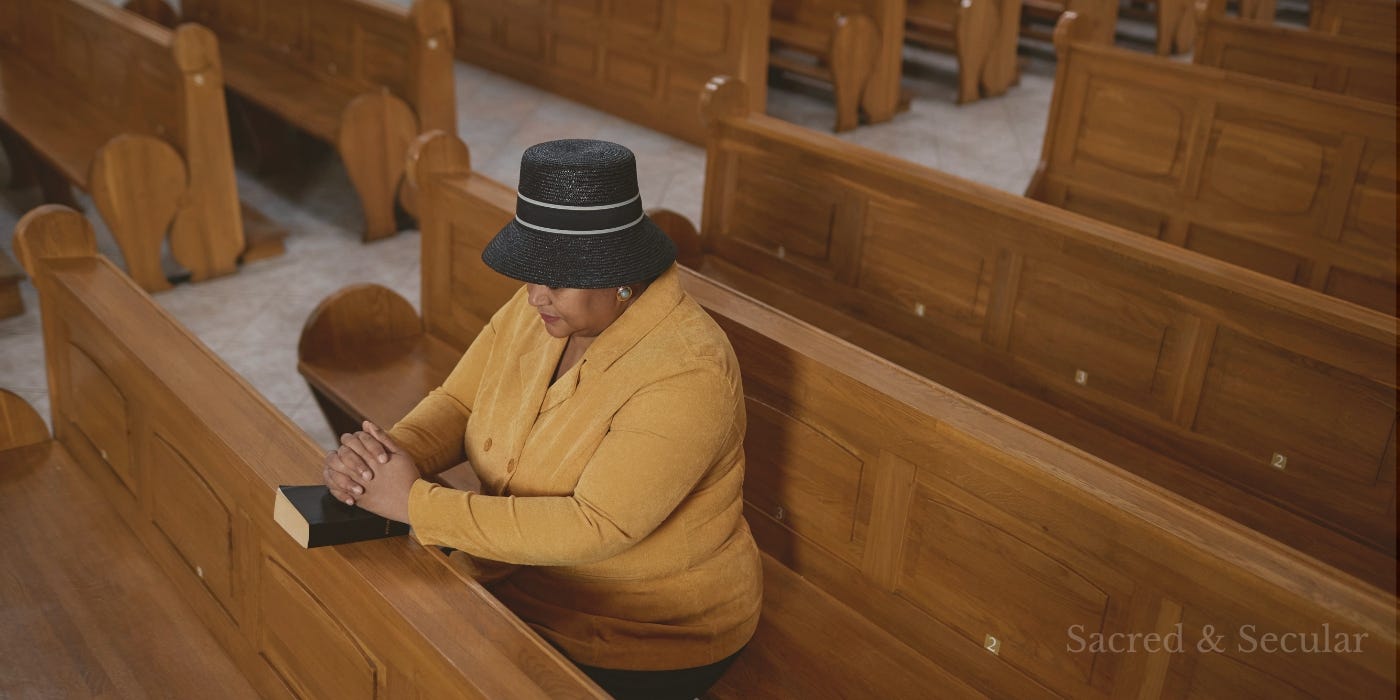
I was welcoming people into church one summer’s day when an elderly, serious-looking lady informed me that she “needed to have a word.”
That is rarely a promising start.
After the service, she explained her concern. She was deeply troubled that the women in the congregation were not wearing hats, as God had commanded.
To be fair, she was wearing a rather fine one.
I offered a slightly hesitant response about cultural context and promised to look into it properly. She was not convinced.
The uncomfortable truth, however, is that she was not entirely wrong.
Because buried in one of Paul’s letters is a passage that does, at first glance, feel very awkward to modern readers. Men, he says, dishonour themselves if they have long hair. Women dishonour themselves if their heads are uncovered.
These are clear instructions about what should, and should not, be on top of your head during worship.
Which raises a simple question most churches never quite address.
If the Bible says women should cover their heads… why don’t they?
— • —
For most of church history, they did.
Not occasionally, but consistently. Hats, veils, shawls. It was not a niche practice. It was normal.
In many traditions, it was expected. A visible expression of reverence, obedience, and shared understanding.
If you look at photographs from seventy or eighty years ago, the difference is striking. Rows of carefully chosen hats. A gentle sign of uniformity. A shared sense of propriety.
Then, gradually, it disappeared.
There was no formal announcement. It simply faded.
Today, many Christians are unaware that the instruction exists.
Yet the text remains exactly as it was.
— • —
This is where things become interesting.
Christians are not generally comfortable with the idea of ignoring Scripture. We speak of it as authoritative, formative, and binding.
Yet here is a command that once shaped behaviour across the global church… that we now quietly set aside.
No protests.
No crisis.
We simply stopped.
Which raises a deeper question.
Who decided that this no longer applies?
This is where things begin to get more complicated.
