


Welcome to Monday’s reflection.
Each weekday, paid subscribers receive an exclusive reflection designed to offer a thoughtful pause amid ordinary life. My prayer is that these brief pieces create a little space for curiosity, contemplation and wonder amid the noise of the day.
If you’ve recently joined us, you may also be interested in my new book, Sacred & Secular: Find God in the Ordinary, which brings together some of the most popular and thought-provoking essays from this journey so far.
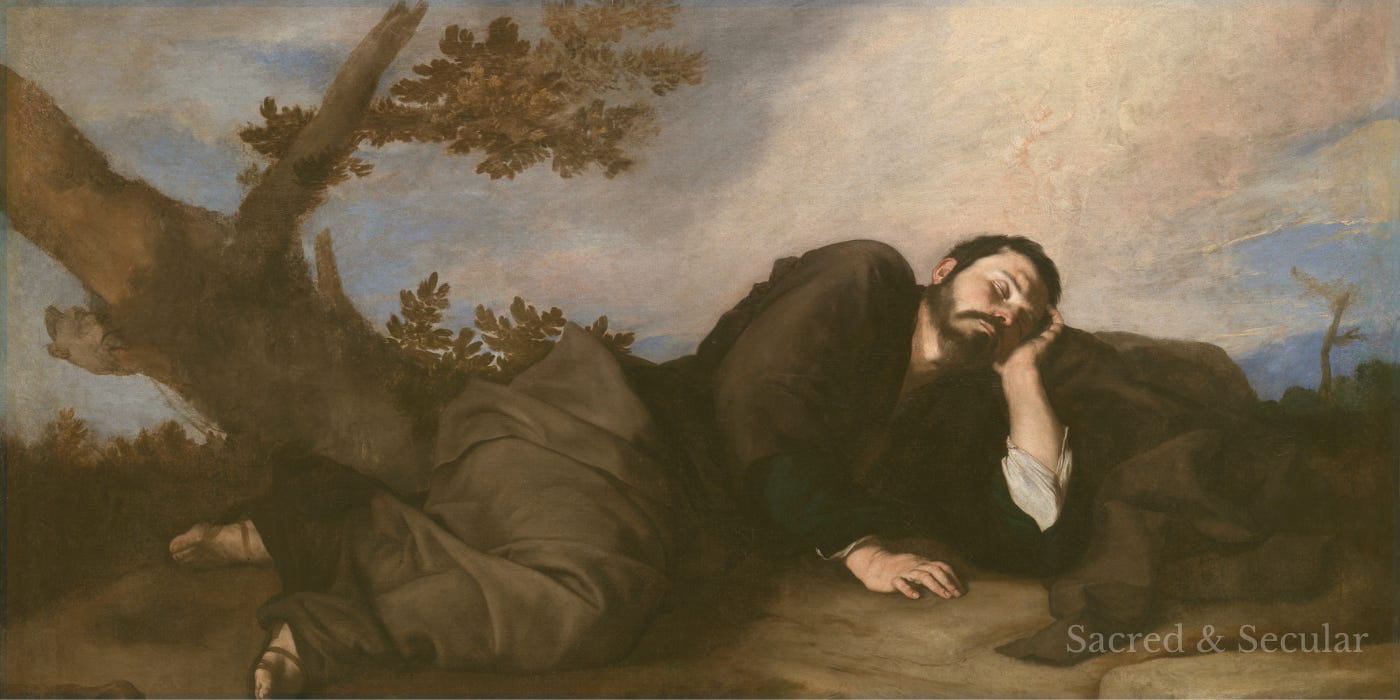
I thought I knew the story of Jacob’s ladder. After all, I’d heard it countless times growing up. Then I discovered one tiny detail that made me realise I may have been picturing the whole scene wrongly.
If someone had asked me to describe it in my younger years, I would have answered without hesitation. Jacob falls asleep in the wilderness. He dreams of a ladder stretching from earth to heaven. Angels climb up and down. God stands at the top. The message seems obvious enough: heaven is somewhere above us, and Jacob is being shown the way.
Or so I thought.
Then I stumbled across a detail I had never noticed before. It was one of those moments that makes you put the Bible down for a minute and simply stare into space.
Because it turns out the story may not be saying what I had always imagined.
