


Thank you for being a subscriber.
Paid subscribers can continue with the full reflection. If you would like to receive these weekday reflections in full, I would love to welcome you as a paid subscriber.
You may also be interested in my new book, Sacred & Secular: Find God in the Ordinary, which brings together some of the most popular and thought-provoking reflections from this journey so far.
A reader recently shared a story with me that has had me thinking ever since.
It concerned an elderly Christian woman who found herself with new neighbours. They were gay, and this presented something of a challenge for her. She did not approve of their relationship, but she also believed that her faith required her to treat them well. So she decided that she would try to be a good neighbour. She would be polite, kind and welcoming, even though there were things about their lives she struggled to understand or accept.
Then something unexpected happened.
Her neighbours began looking out for her. They cleared leaves from her garden, shovelled snow from her path, checked that she was all right and helped whenever she needed something. Over time, the relationship she had imagined began to turn itself upside down. She had started out wondering how she could be a good neighbour to them, only to discover that they were the ones repeatedly behaving as good neighbours towards her.
Eventually, she found herself reflecting on the experience and came to a rather uncomfortable conclusion: “I wasn’t the one who was the good neighbour!”
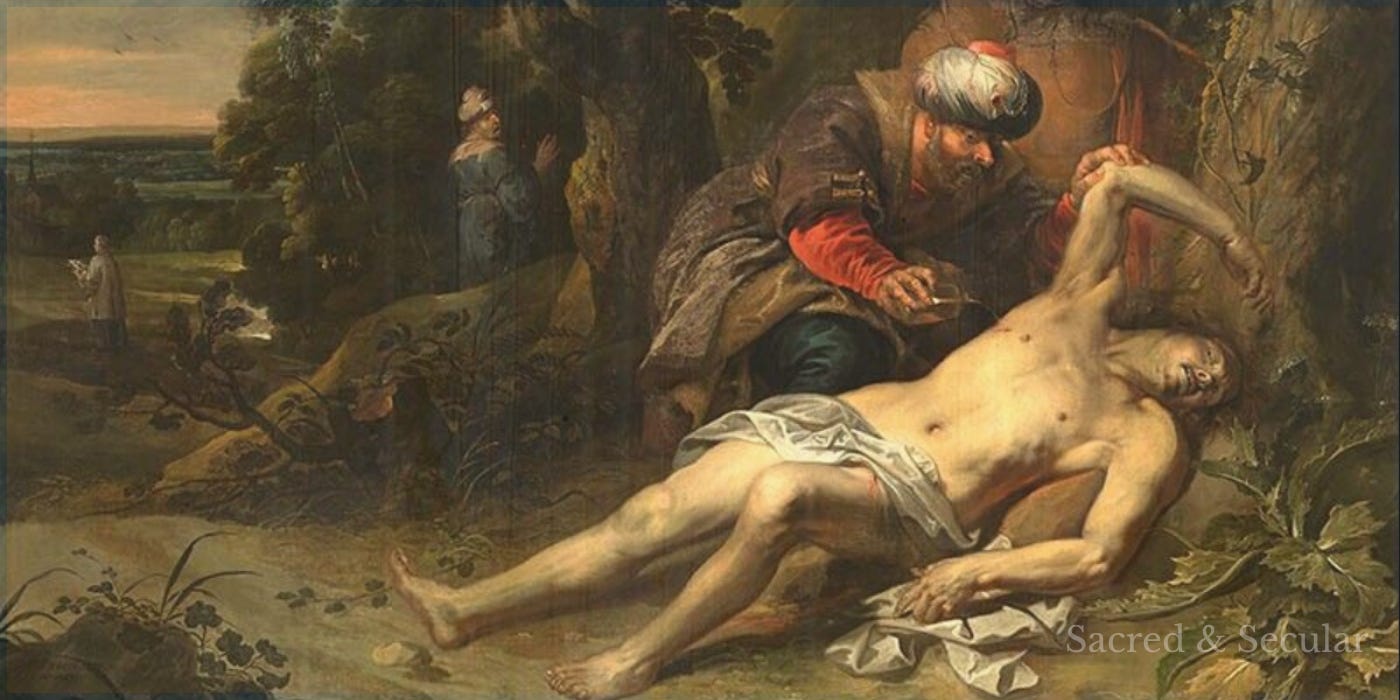
I still think about that story because it reminds me of something about the parable of the Good Samaritan that we often overlook. Most of us hear the story and immediately imagine ourselves as the Samaritan. We ask ourselves whether we would stop, whether we would help and whether we would show compassion to somebody different from us.
I wrote about those questions earlier this month, and they remain important ones. Lately, though, I have found myself wondering whether Jesus is asking another question as well.
What if you are the person lying beside the road, and the person who stops is somebody you would never have chosen?
