


Welcome to Monday’s Reflection.
Daily reflections are part of the offering to our paid community, and I would love to welcome you to be a part of it. In addition to the reflections, you get full access to the archive, which now contains more than 250 searchable reflections.
You may also be interested in my new book, Sacred & Secular: Find God in the Ordinary, which brings together some of the most popular and thought-provoking reflections from this journey so far.
They say school is supposed to be the best years of your life.
For me, it was a period I would rather forget.
Whilst everyone else seemed busy sorting people into categories, the popular and unpopular, the important and insignificant, the people who mattered and those who did not, I somehow ended up somewhere in between.
I was not important enough to be included, but thankfully not significant enough to be singled out either.
The result was that I became invisible.
At the time, I assumed this was simply how school worked and that adulthood would be different. It was therefore slightly disappointing to discover that the world still operates in much the same way.
We are constantly sorting people into categories. Heroes and villains, good people and bad people. Those who are like us and those who are not. Those we instinctively trust and those we instinctively distrust.
Most of us, of course, prefer to imagine ourselves somewhere on the side of the heroes. We are usually generous enough to recognise our own faults, but we are often much quicker to notice the faults of others.
Perhaps that is simply part of being human. A complicated world feels easier to navigate when we divide it into clear groups. We create boundaries because boundaries make life feel more manageable.
But one of the things I love about Jesus is how often he challenges the boundaries we create.
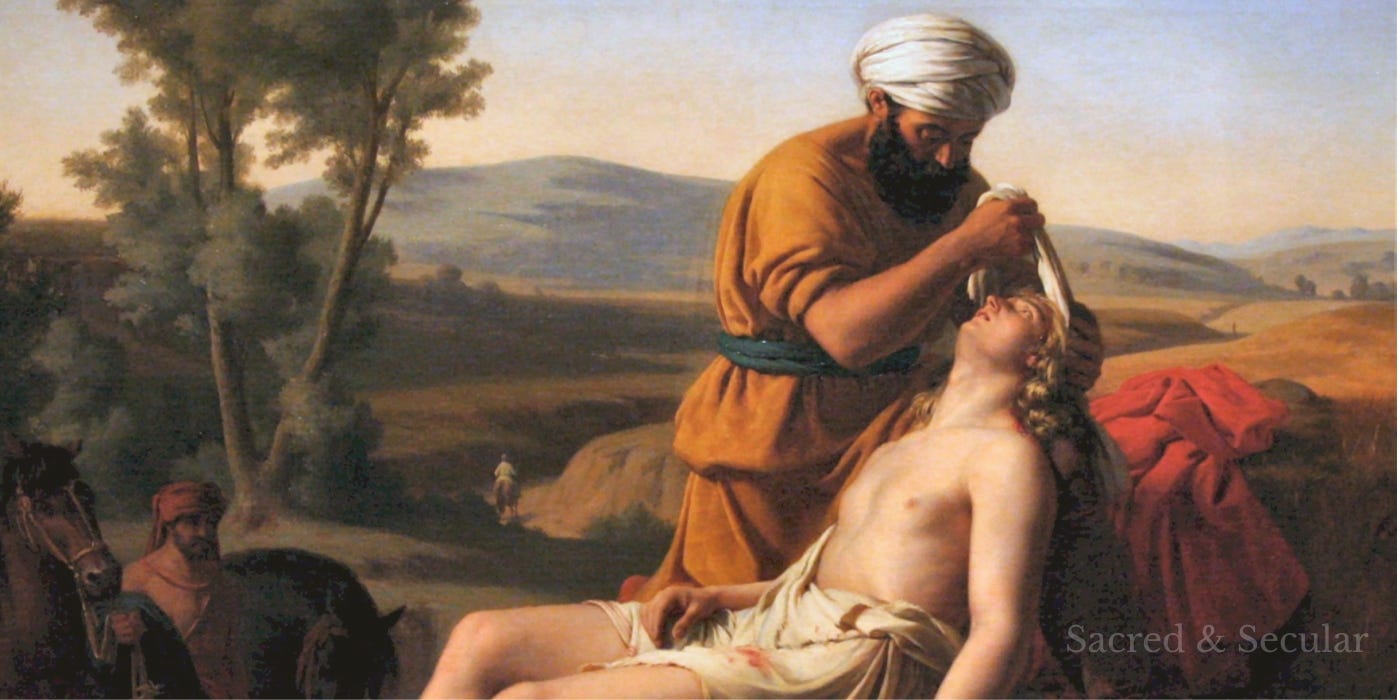
He repeatedly draws attention to the people standing on the outside. The overlooked. The rejected. The people others have already decided do not belong. And perhaps nowhere is that more uncomfortable than in one of his most famous stories.
The Good Samaritan.
Because the most shocking part of this story is not that Jesus tells people to be kind.
The shocking part is who Jesus chooses to show that kindness.
The villain becomes the hero.
