


Welcome to my Sunday reflection.
Some biblical characters arrive with genealogies, explanations, and long backstories. Others appear without warning, bless the chosen ones, and vanish again. Melchizedek belongs firmly in the second category, and his brief appearance quietly unsettles everything we think we know about who God belongs to.
A strange character called Melchizedek first appears in the bible in Genesis chapter fourteen, just after we meet Abraham, which, by biblical standards, is practically the opening credits.
Abraham’s story begins with a big promise: he’ll be the father of a new kind of tribe. Not one obsessed with land, power, or who’s in and who’s out, but a tribe that exists to bless others.
That’s revolutionary stuff. Most tribes of the time survived by drawing borders. Abraham’s tribe would exist to erase them.
But there’s a question that nags at thoughtful readers, ancient and modern alike:
If this is the story, if Abraham’s tribe is the chosen one, what about everyone else? What about those who don’t fit the label?
Just as that question lingers in the air, in walks Melchizedek.
The Priest from Nowhere
Abraham has just returned from battle. He is victorious, dusty, and probably exhausted when he’s met by someone unexpected.
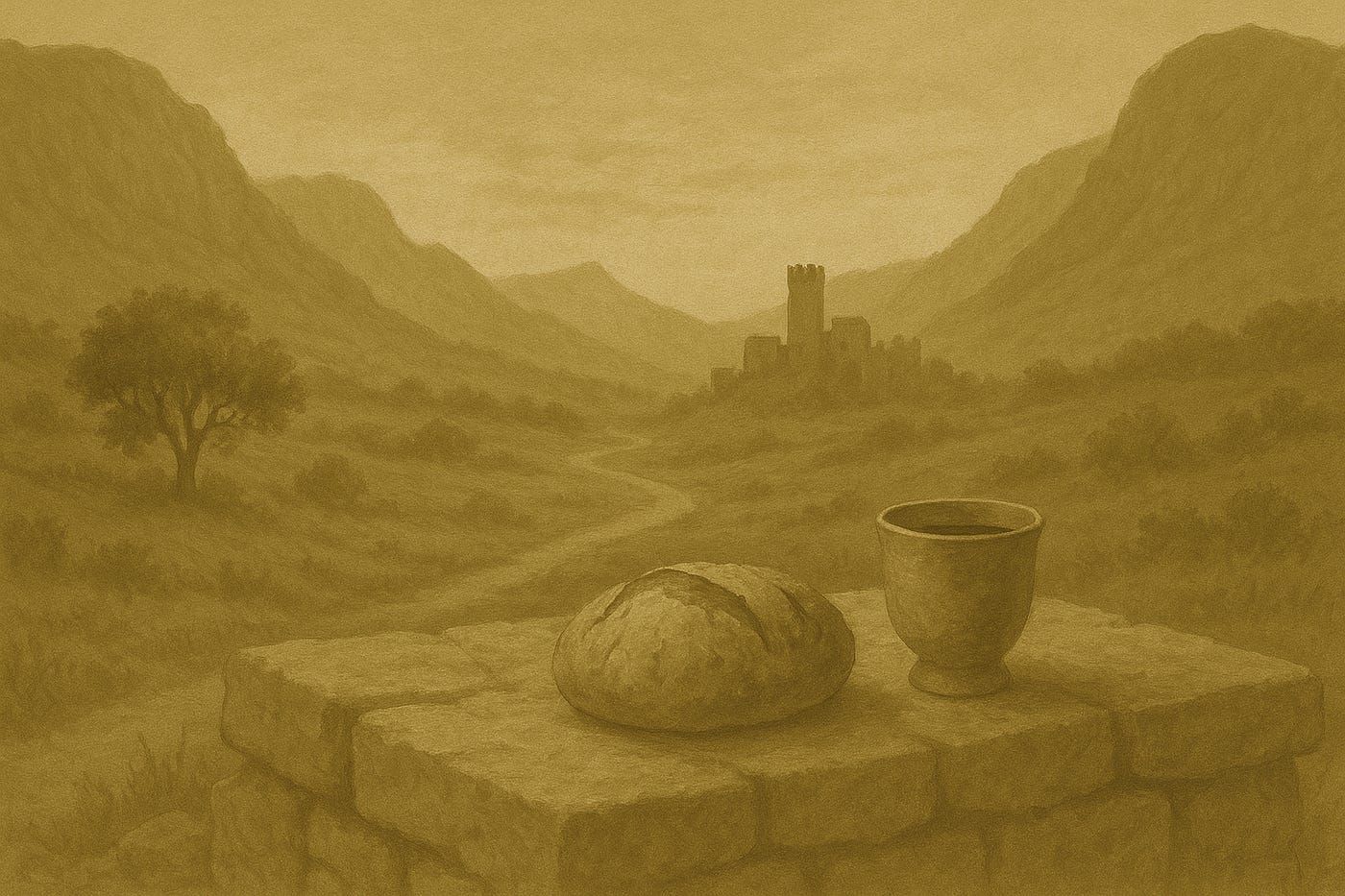
A man named Melchizedek, the king of Salem. He brings bread and wine and blesses Abraham.
But then comes the twist: Genesis quietly adds that Melchizedek is “a priest of God Most High.”
Wait — what?
Abraham is meant to be the starting point, the first chapter of God’s new story. Yet here’s this mysterious figure, already serving God and blessing others long before Abraham’s faith had even taken root.
It’s as if the Bible itself winks at us and says: You thought the story started there? Think again.
Abraham, the man chosen to bless others, receives the blessing. In response, he offers Melchizedek a tenth of everything, a gesture of reverence and recognition.
Then, as suddenly as he appears, Melchizedek disappears. No backstory. No genealogy. No “where are they now?” epilogue.
He’s gone, except for one haunting reappearance in the Psalms, and much later, in the New Testament book of Hebrews.
Bigger Than We Thought
Which brings us back to that uncomfortable question: Is the Bible too narrow? Too focused on one tribe, one story, one way?
Melchizedek’s presence whispers otherwise.
Right there in the opening chapters, the Bible sneaks in a truth many of us miss: God is not confined to our categories. He’s not waiting for our permission to act beyond our walls.
The Bible’s narrative might trace one line, Abraham’s family, but embedded within it is a sneaky hint that the divine refuses to stay inside the story.
Melchizedek is a divine photobomb. A reminder that God has always been bigger than our boxes.
The Melchizedek Thread
Centuries later, when the writer of Hebrews tries to explain how Jesus could be both human and divine, both mortal and priest, he reaches back, all the way back to, you guessed it … Melchizedek.
Jesus, he says, isn’t a priest because of bloodline or ritual. He’s a priest “in the order of Melchizedek,” one who embodies a new kind of connection, not bound by lineage, but by life itself.
Bread and wine. Blessing and mystery. The same symbols reappear.
The old meets the new, and we realise it was never as narrow as it seemed.
The God Who Crosses Borders
So what does this ancient encounter mean for us in our postmodern, oat-milk-flat-white world?
This means we shouldn’t be surprised when the voice of truth or compassion comes from unexpected places, like from people outside our tradition or from the “wrong” kind of person with the “wrong” kind of background.
Sometimes God sends an outsider.
Sometimes the blessing comes from beyond the tribe.
Sometimes the priest shows up out of nowhere, holding bread and wine, reminding us who we are and what this is all about.
Melchizedek is proof that faith has never been as exclusive as it looks on paper.
The story of God has always had open borders.
If we stay open and alert to the mystery, we might just find that the sacred still walks among us in the most surprising disguises.
Melchizedek doesn’t answer all our questions. He raises better ones. He reminds us that faith has always involved surprise, interruption, and voices we didn’t expect. If God has always crossed borders, then perhaps our task is not to guard the edges, but to recognise blessing when it appears, even when it comes from outside the tribe.
Paul.