


Thank you for being a subscriber.
Paid subscribers can continue with the full reflection, where I reflect on the question Jesus asked his disciples, and still asks us today: who do we say he is?
If you would like to receive these weekday reflections in full, I would love to welcome you as a paid subscriber.
You may also be interested in my new book, Sacred & Secular: Find God in the Ordinary, which brings together some of the most popular and thought-provoking reflections from this journey so far.
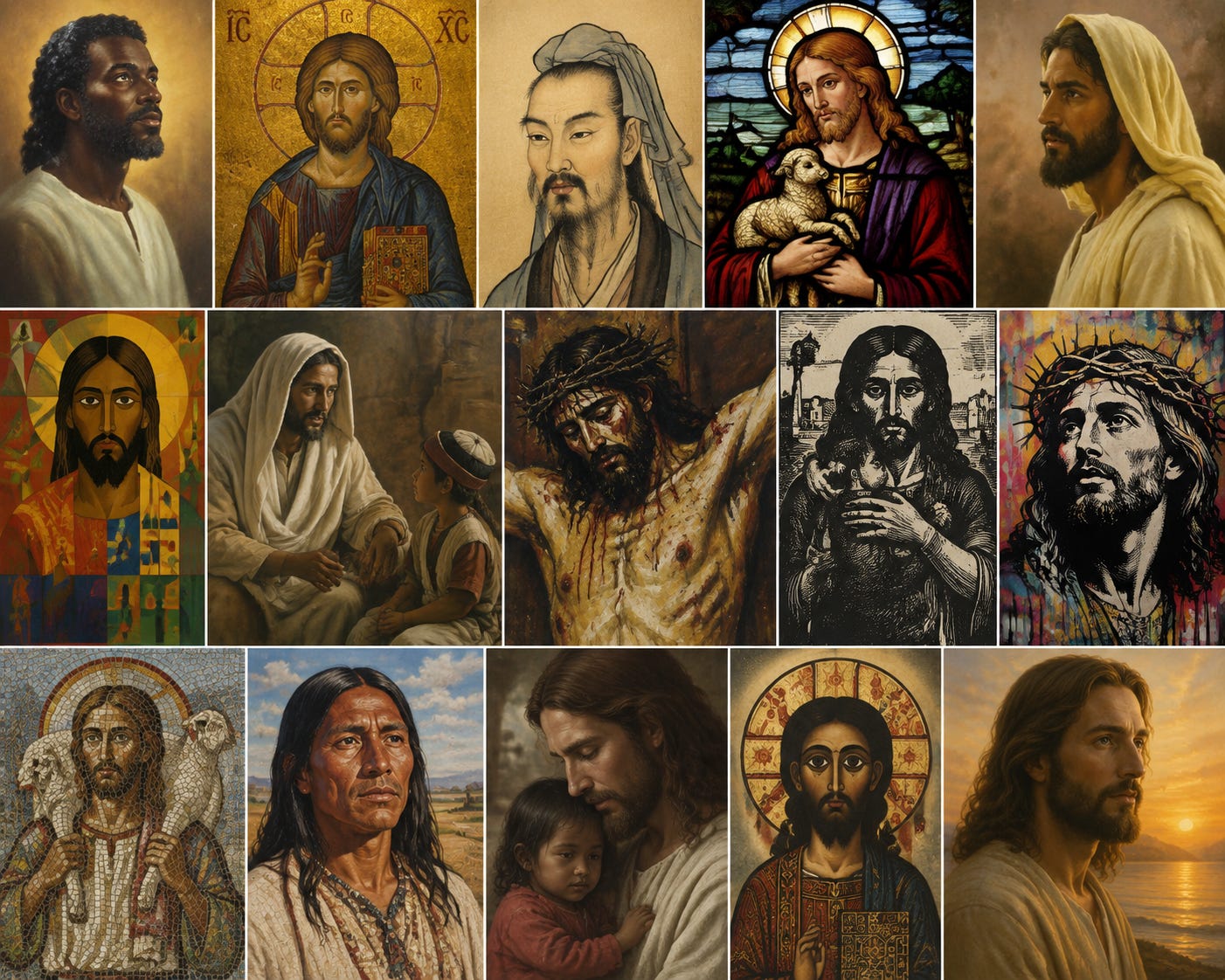
One Sunday morning, before the service began, I placed about 20 pictures of Jesus throughout the church.
They were all different. Some were familiar, some were beautiful, and some were deeply challenging. They came from different cultures and different communities, each offering a glimpse of how people across the world have imagined the person at the centre of the Christian faith.
What fascinated me was not simply the variety of artistic styles, but what those images revealed about the people who had created them. Across history, people have often portrayed Jesus in ways that reflect their own experiences, struggles and hopes. In some ways, this is inevitable. We do not encounter Jesus in a vacuum. We encounter him from within the stories, cultures and circumstances that have shaped us.
Here in the United Kingdom, many of us have inherited a very particular image of Jesus. He is often portrayed as a white man with gentle features, surrounded by soft light, perhaps with children, fluffy sheep or birds nearby. It is an image so familiar that we often no longer notice how much it reflects the culture that produced it.
Yet when you begin to look at images of Jesus from other parts of the world, something changes.
You encounter a Jesus who has been seen through very different experiences.
