


Thank you for being a free subscriber here at Sacred & Secular.
You are welcome here. Free members receive a full reflection every Sunday, while paid membership unlocks daily reflections like this one and full access to an archive of more than 300 searchable reflections.
You may also be interested in my book, Sacred & Secular: Find God in the Ordinary (USA Link), which brings together some of the most popular and thought-provoking reflections from this journey so far.
I have read Luke’s description of Jesus travelling through Galilee countless times, but until recently, I was not sure I ever stopped to ask a very boring but practical question.
Who paid for lunch?
I know it sounds slightly ridiculous when put like that, but somebody must have bankrolled it all. Jesus was travelling from town to town with a sizeable group of people. The Twelve were with him, but Luke tells us they were not alone. There were women travelling with them as well, along with others whose names we never learn, and all those people needed to eat, sleep somewhere, replace worn-out clothes and somehow manage all the ordinary expenses that accompany human life.
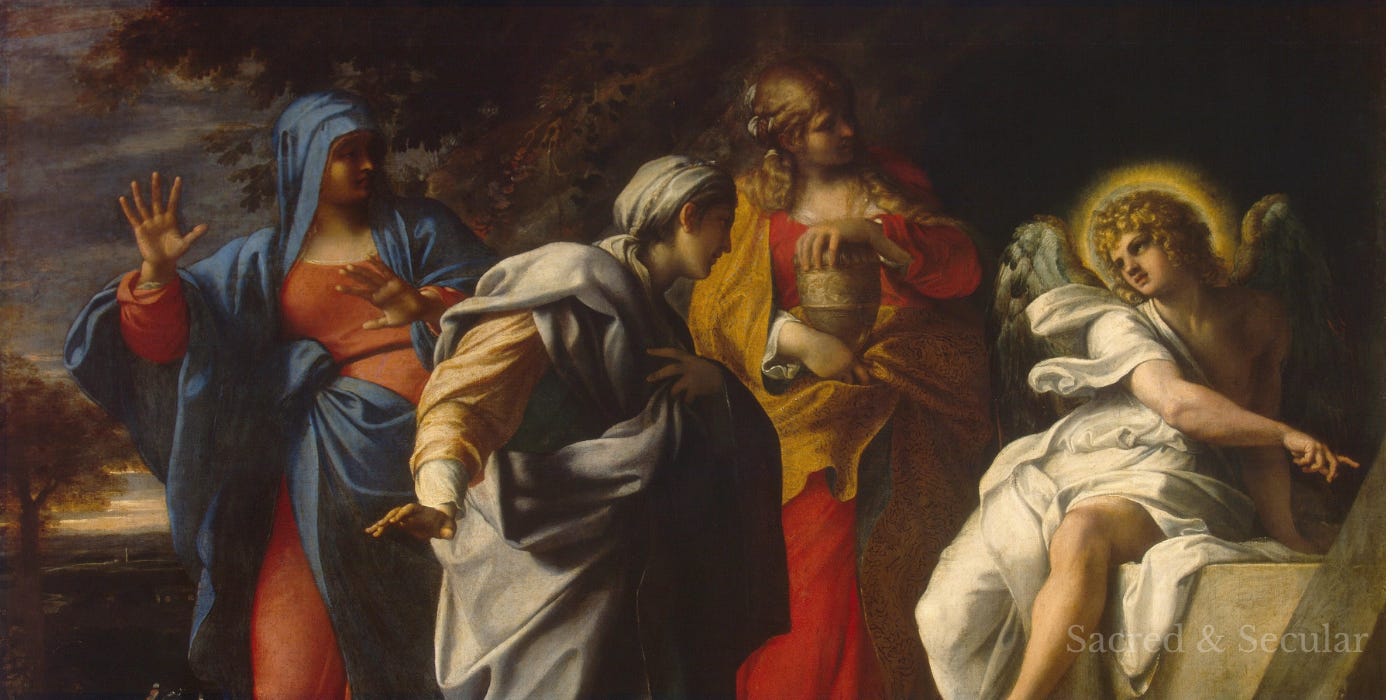
Christian art has perhaps not helped us here. We tend to picture Jesus walking along a dusty road with twelve men following faithfully behind him, apparently surviving without food, money, laundry or any of the other irritating necessities that follow us everywhere, perhaps assuming that Jesus just provided food out of nowhere on demand.
Luke gives us a rather more realistic picture.
He tells us:
“The Twelve were with him, and also some women who had been cured of evil spirits and diseases: Mary (called Magdalene)… Joanna, the wife of Chuza, the manager of Herod’s household; Susanna; and many others. These women were helping to support them out of their own means.”
I had read that final sentence many times, but I am not sure I had really allowed myself to picture what it meant.
