


Thank you for subscribing to Sacred & Secular. My prayer is that you will find a cosy corner within your day to reflect on this ancient story.
You may also be interested in my book, Sacred & Secular: Find God in the Ordinary (USA Link), which brings together some of the most popular and thought-provoking reflections from this journey so far.
Last week, somebody left a lengthy comment beneath one of my articles.
They had clearly given it some thought. Point by point, they explained why I was wrong, dismantling what they believed I had argued and highlighting the flaws in my reasoning. It was detailed, confident and, judging by its length, must have taken a considerable amount of time to write.
There was only one problem.
They were arguing against something I had never actually said.
Somewhere along the way, they misunderstood what I was trying to communicate and then constructed an elaborate response based on their own interpretation.
I suspect most writers know the experience. You spend hours trying to choose your words carefully, only to discover that somebody has read an entirely different article from the one you thought you had written. As a priest, I sometimes experienced the same thing after preaching. Somebody would latch onto a single word or phrase and construct an entire argument I had never actually made.
My first reaction was frustration. I wanted to explain where they had gone wrong, perhaps with an equally lengthy reply of my own. But after the irritation had subsided, another, considerably less comfortable thought occurred to me.
How often do I do exactly the same thing?
Not necessarily with articles, but with people. How often have I assumed I understood somebody’s motives without ever asking them? How often have I formed an opinion about a situation after hearing only part of the story? How many times have I confidently believed I could see what was happening, only to discover later that I had completely misunderstood it?
That question brought to mind one of Jesus’ most familiar sayings:
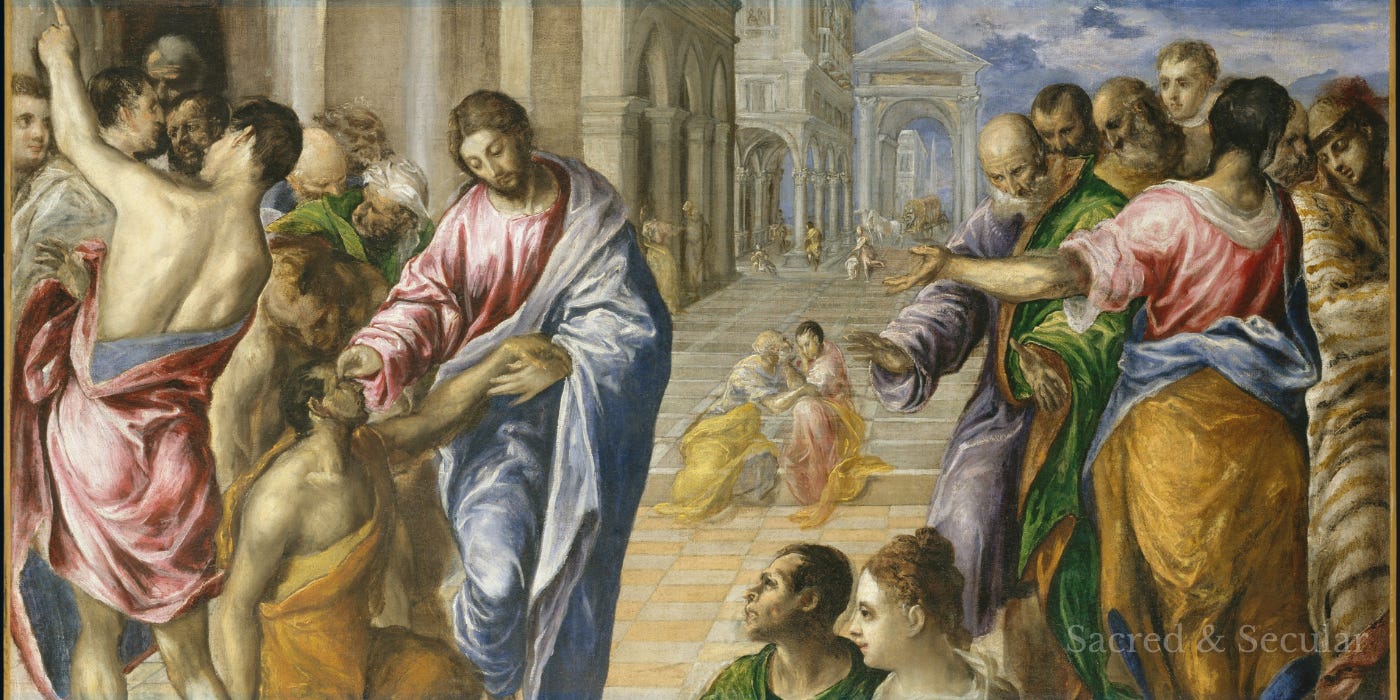
“If the blind lead the blind, both will fall into a pit.”
We still use the expression today. Usually, it describes incompetent leadership: somebody who does not know what they are doing, guiding somebody else who knows even less.
But in the Gospel story, Jesus seems to be pointing towards something rather more troubling.
The people he describes as blind are convinced that they can see.
