


Welcome to today’s reflection.
Much of Sacred & Secular is about slowing down long enough to notice the deeper questions that sit beneath ordinary life, faith, suffering, hope, and the search for meaning.
Daily reflections like this are supported by paid subscribers, and I am deeply grateful for the space they help create here.
If these writings encourage or accompany you, you are warmly invited to support the work by becoming a paid subscriber.
When I was a full-time minister, one of the hardest parts of the role was visiting people who were terminally ill. Sometimes I would visit repeatedly over weeks or months, watching somebody slowly disappear from the life they had once known.
I have to admit there were moments when I would leave those visits and sit quietly in my car for a while before driving home.
Not because I had lost my faith, but because I carried questions I could not resolve.
Why them?
Why now?
Why does suffering seem to arrive so unevenly?
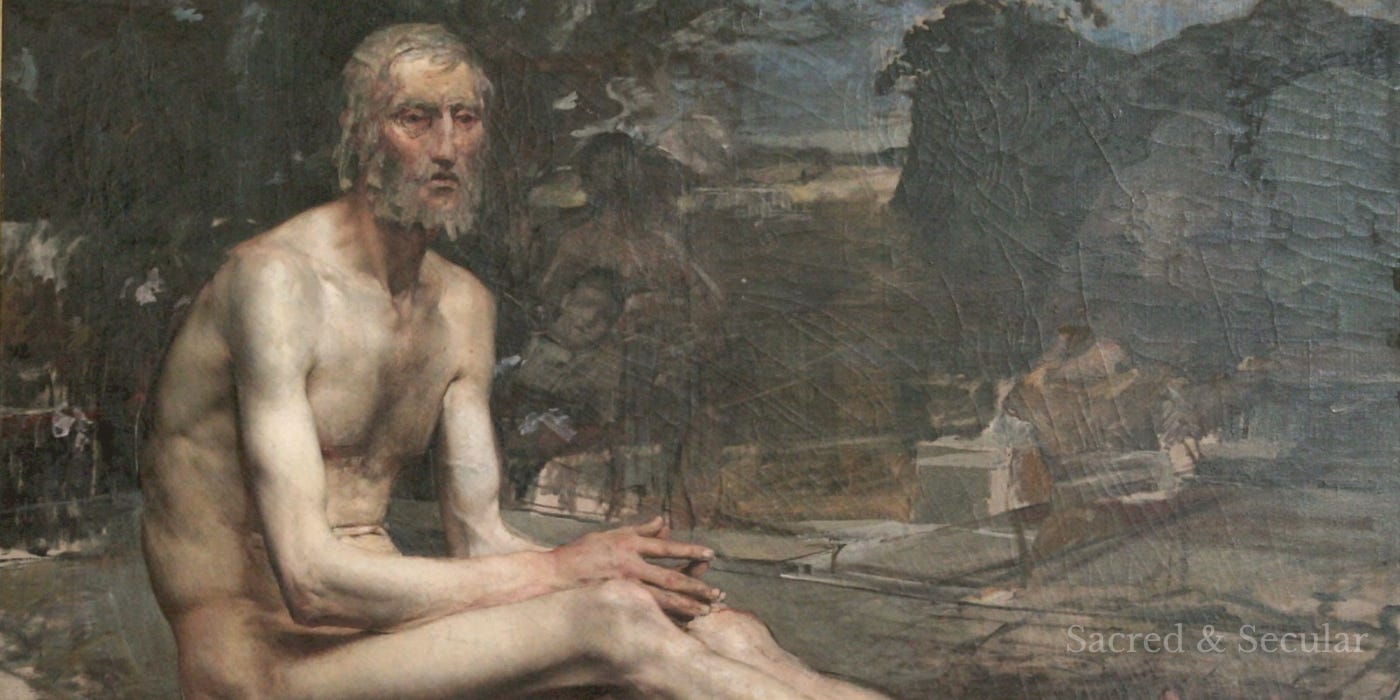
Over time, I realised those questions were not signs of weak faith. They were deeply human questions, and they are far older than any of us. Long before psychology, self-help books, or modern conversations about trauma and meaning, an ancient biblical story wrestled with exactly the same unease.
The story is called the Book of Job.
And despite its reputation, it is not really a book that explains suffering.
It is a book that refuses to lie about it.
